Across global higher education systems, teaching excellence is being redefined not only in terms of academic quality, but also relevance, employability, innovation, and societal impact. Universities across Europe and other regions are under increasing pressure to demonstrate the value of their educational provision to students, employers, and society at large. This shift is driven by international quality benchmarks, digital transformation, growing student diversity, and the expectation that graduates must be prepared for complex, rapidly changing professional environments.
In response, institutions are moving away from traditional content transmission towards learning models that emphasise capability development, critical thinking, ethical reasoning, and value creation. Within this landscape, Outcome-Based Education (OBE) has emerged internationally as a shared and credible framework for aligning curriculum design, pedagogy, and assessment with clearly articulated graduate outcomes. Higher education reforms across different regions, including India, Europe, and parts of Asia and Africa, provide valuable institutional contexts for examining how policy intent can be translated into sustainable and meaningful academic practice. In this context, the discussion contributes particularly to ACEEU standards related to Education, Institutional Commitment, and Impact, which collectively frame how teaching excellence can support engagement and innovation within higher education institutions.
Teaching excellence emerges when policy frameworks are translated into shared academic practice.
 Teaching Excellence in Contemporary Universities
Teaching excellence today extends far beyond classroom delivery. It encompasses curriculum relevance, learner engagement, assessment credibility, mentoring quality, research integration, ethical grounding, inclusivity, and alignment with labour-market and societal needs. Universities are increasingly expected to educate graduates who are not only knowledgeable in their disciplines, but also adaptable, innovative, socially responsible, and capable of lifelong learning.
As a result, faculty roles have evolved significantly. Academics are no longer viewed solely as subject experts, but as facilitators of learning, mentors, curriculum designers, and academic leaders. Effective teaching now involves designing learning experiences that promote inquiry, reflection, collaboration, interdisciplinarity, and real-world problem solving. In this context, ACEEU’s Standard on Education emphasises structured, outcome-oriented programme design as a cornerstone of teaching excellence and institutional impact.
Outcome-Based Education as a Strategic Framework
To operationalise this commitment to teaching excellence, institutions increasingly rely on Outcome-Based Education as a strategic framework for designing, delivering, and continuously enhancing their academic programmes. Outcome-Based Education provides institutions with a coherent academic architecture through which learning outcomes are explicitly defined, systematically assessed, and continuously improved. When embedded effectively, OBE strengthens transparency, comparability, and accountability—principles that are central to contemporary quality assurance systems and cross-border recognition of qualifications.
More importantly, OBE shifts attention from what is taught to what students are able to demonstrate upon completion of their studies. This outcome orientation encourages reflective teaching practice, alignment across programmes, and evidence-informed curriculum review. When integrated with broader institutional priorities such as curricular flexibility, experiential learning, digital education, and graduate employability, OBE becomes a powerful driver of academic coherence and continuous improvement rather than a compliance-driven exercise. This institutional alignment reflects the importance of strategic leadership and governance emphasised within ACEEU’s Standard on Institutional Commitment.
Outcome-based approaches succeed when faculty take ownership of learning and assessment.
Faculty Development and Institutional Change
International experience consistently demonstrates that faculty engagement is the single most critical factor in the success of educational reform. Universities that sustain teaching excellence invest strategically in faculty capability, confidence, and leadership. Structured faculty development initiatives play a central role in strengthening curriculum design competence, assessment literacy, learner engagement strategies, and reflective teaching practice.
Such initiatives are most effective when supported by enabling institutional conditions. Recognition systems, incentives, mentoring structures, and academic support units help legitimise teaching innovation and reduce resistance to change. When faculty perceive teaching excellence as a valued and supported dimension of academic work, institutional reforms gain momentum and sustainability.
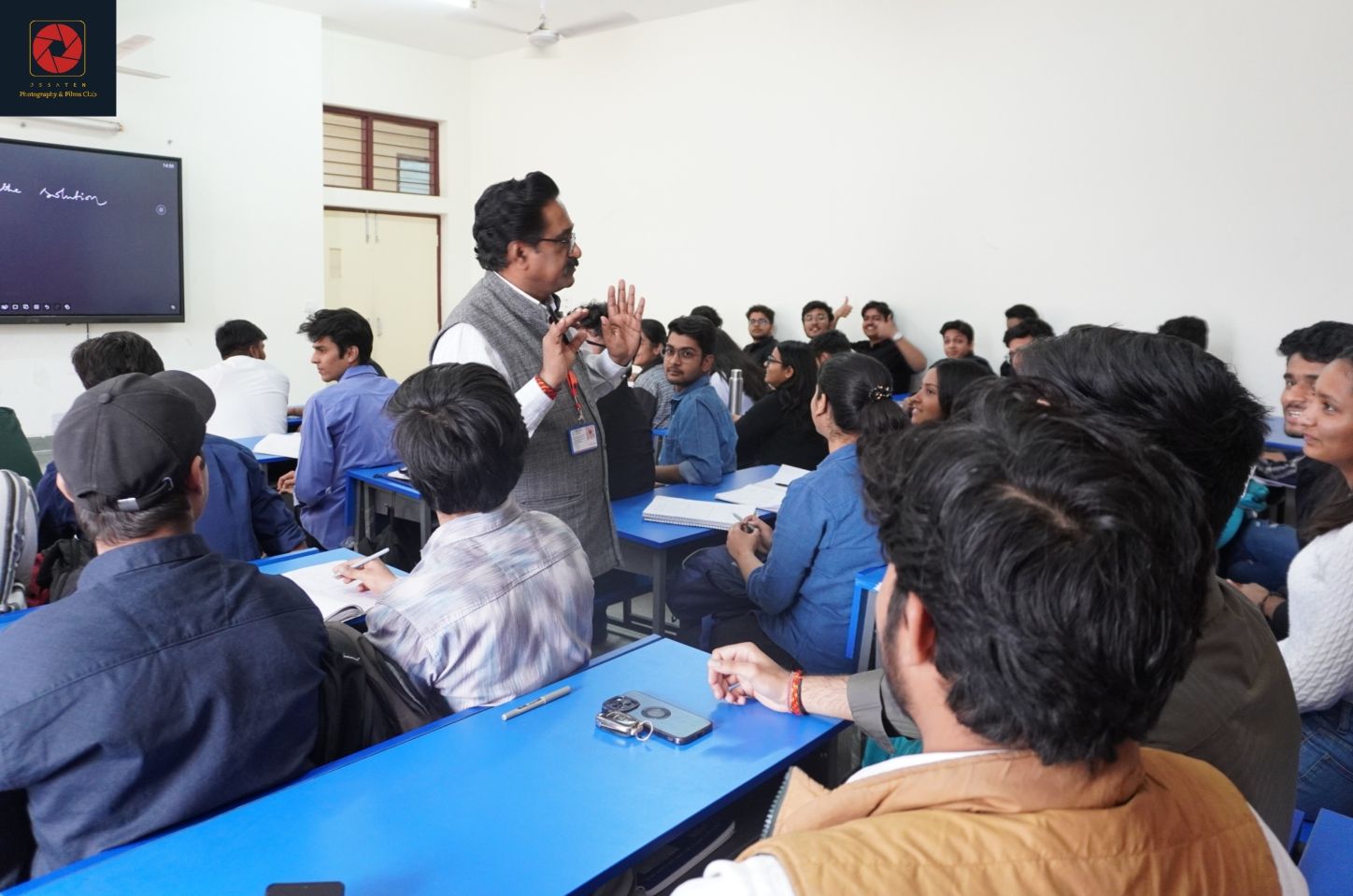
At JSS University, Noida, teaching excellence has been positioned as a strategic institutional commitment rather than a regulatory requirement. The university adopted a structured faculty development approach to support the implementation of outcome-based principles across programmes and disciplines. The initiative aimed to build shared understanding of outcomes, enhance practical pedagogical capability, and strengthen alignment between curriculum design, assessment practices, and institutional goals.
Importantly, the approach emphasised integration rather than fragmentation. Teaching was linked more explicitly with research, industry engagement, and societal relevance, reinforcing the idea of the university as an engaged institution with multiple interconnected missions.
Impact and Reflections
The initiative resulted in tangible academic and cultural outcomes. Faculty reported improved confidence in outcome-based course design, assessment planning, and learner engagement. Academic programmes demonstrated stronger coherence between intended learning outcomes, teaching strategies, and assessment methods. From an institutional perspective, the university enhanced its readiness for internal review, accreditation processes, and evidence-based quality assurance.
These developments contributed to the emergence of a reflective academic culture—one that values collaboration, dialogue, continuous improvement, and shared responsibility for teaching excellence. Such cultural change is critical for sustaining reform beyond individual projects or policy cycles and illustrates how universities can generate meaningful institutional and educational impact.
As universities navigate increasing complexity, accountability, and societal expectations, teaching excellence must be understood as an institutional culture rather than an isolated initiative. Outcome-Based Education offers a robust and internationally aligned framework for structuring this work, but its effectiveness depends on empowered faculty, engaged leadership, and sustained institutional commitment.
The experience of JSS University, Noida demonstrates how structured faculty development can translate reform agendas into meaningful academic practice. While rooted in a specific national context, the insights generated are widely applicable and resonate with global discussions on quality enhancement, engagement, and the future of higher education. Overall, the experience illustrates how outcome-oriented programme design (Education), strategic leadership and governance support (Institutional Commitment), and measurable academic and cultural transformation (Impact) must work in alignment to achieve sustainable excellence within higher education institutions.
Acknowledgements
 Dr. B. Suresh
Pro Chancellor, JSS University, Noida, India
Dr. B. Suresh is the Pro Chancellor of JSS University, Noida, and a nationally respected leader in higher education and health sciences. With decades of experience in academic governance and policy leadership, he has significantly contributed to strengthening professional education, institutional quality, and ethical standards across higher education institutions in India.
 Dr. T. G. Mamatha
Registrar, JSS University, Noida, India
Dr. T. G. Mamatha serves as the Registrar of JSS University, Noida, bringing extensive experience in academic administration and regulatory frameworks. She plays a key role in strengthening institutional systems, policy implementation, and transparent governance, supporting the university’s commitment to quality assurance and operational excellence.
 Dr. Nilani P.
Dean, Bureau of Quality & Sustainability, JSS University, Noida, India
Dr. Nilani P. is Dean of the Bureau of Quality & Sustainability at JSS University, Noida. Her work focuses on institutional quality frameworks, sustainability integration, and governance-led transformation in higher education. She actively contributes to accreditation readiness, policy alignment, and strengthening engaged and entrepreneurial university practices.